
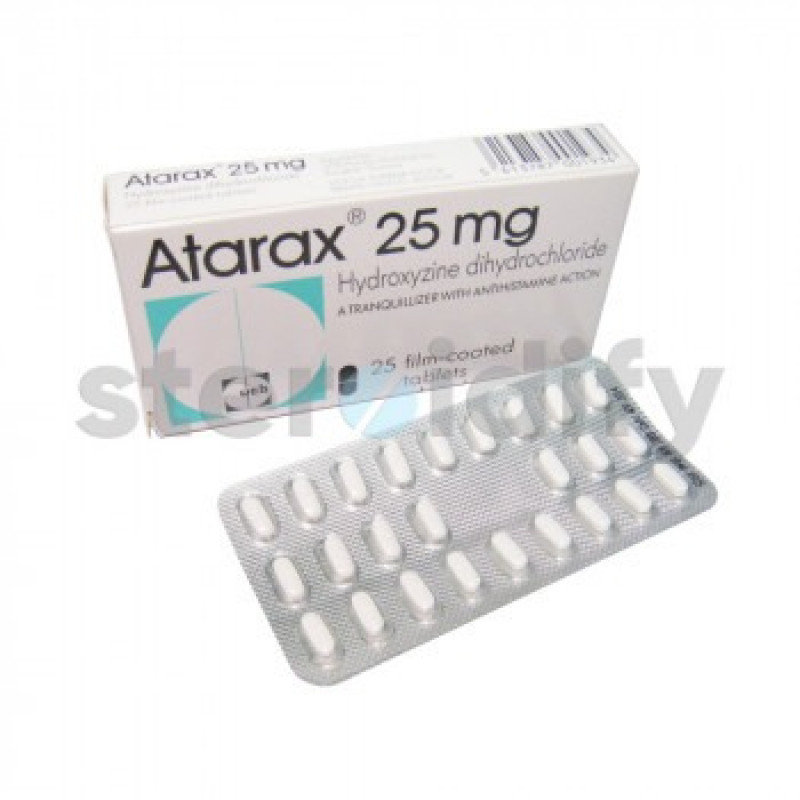
Atarax (Hydroxyzine) — Effective Relief for Hives and Anxiety
Are you or a loved one struggling with the intense discomfort of skin irritation, hives, or allergy-related itching? Atarax provides professional-grade relief for those suffering from the symptoms of acute or chronic nettle rash (urticaria) and contact eczema. Designed for targeted use, this medication helps manage the physical distress of allergic reactions while providing a calming effect for adults facing anxiety.
Specifications
| Active Substance | Hydroxyzine |
| Form | 30 pills x 25 mg |
| Manufacturer | UCB |
| Classification | Histamine (H1) Blocker |
How Atarax Works
Atarax contains the active ingredient hydroxyzine, which belongs to a class of medicines known as sedating antihistamines. When the body experiences an allergic reaction, it produces histamine, a substance that increases blood flow to the affected area and triggers the itching and swelling associated with hives and allergic eczema.
By blocking histamine receptors, hydroxyzine effectively interrupts this allergic response. Furthermore, because hydroxyzine can enter the brain in significant quantities, it provides a calming effect. This makes it particularly useful for managing anxiety in adults and relieving the intense itching that often worsens at night, especially in children.
Usage and Dosage
The dosage of Atarax is determined by your doctor based on your age, the condition being treated, and your individual response to the medication. It is vital to follow the instructions provided by your healthcare professional or the dispensing label provided by your pharmacist.
- Administration: Atarax tablets should be taken with a drink of water.
- Food Compatibility: The medication can be taken either with or without food.
- Duration: This medicine should be used for the shortest time possible to achieve the desired results.
Important Safety Information
As with all pharmaceutical products, there are important safety considerations to keep in mind:
- Driving and Machinery: This medicine may cause drowsiness. If you experience this, avoid driving or operating heavy machinery. ly
- Alcohol: It is recommended not to drink alcohol while taking this medicine.
- Allergy Testing: If you are planning a skin prick or patch test, stop taking antihistamines one week prior to ensure accurate results.
Please use caution if you have:
- Liver or kidney-related conditions or decreased function.
- Glaucoma or raised pressure in the eyeball.
- Convulsive disorders such as epilepsy.
- Myasthenia gravis or an overactive thyroid (hyperthyroidism).
- Breathing problems like emphysema or bronchitis.
- A family history of sudden heart-related death at an early age.
FAQ
What are the possible side effects of Atarax?
While not everyone will experience side effects, some users may report headache, dry mouth, dizziness, nausea, or constipation. In some cases, it may cause blurred vision, increased heart rate (tachycardia), or difficulty passing urine.
Can Atarax be used for anxiety?
Yes, hydroxyzine is used in the short-term treatment of anxiety in adults. Due to its ability to suppress activity in certain regions of the central nervous system, it provides a calming effect for those experiencing tension or anxiety.
How should I manage the medication if I have liver issues?
For individuals with decreased liver function, caution is required. Specifically, the medicine should be avoided by those suffering from severe liver disease or total liver failure.