
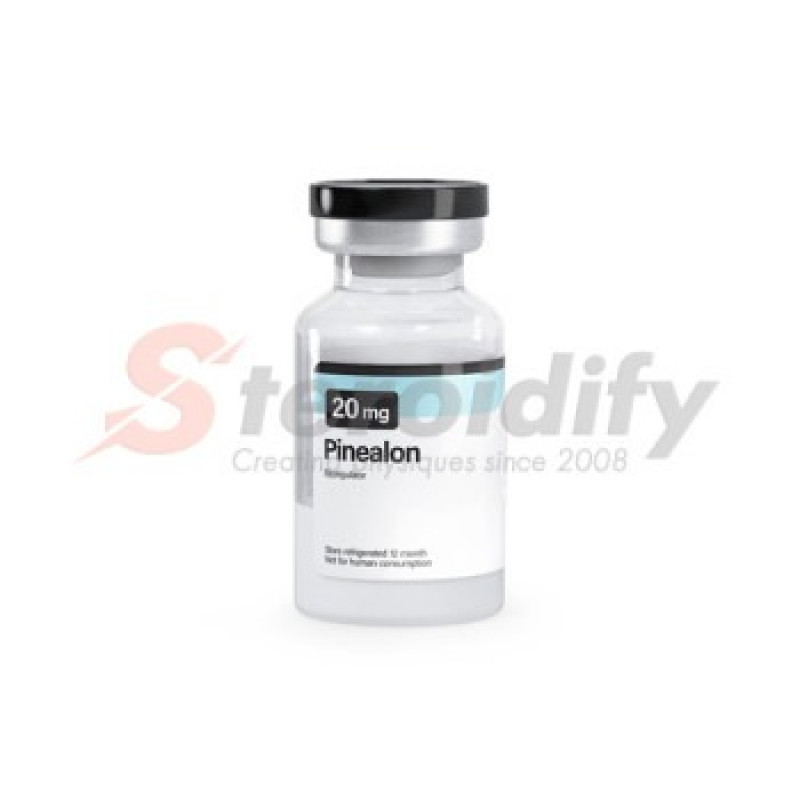
Ultima-Pinealon 20mg
- Brand: Ultima Pharma
- Product Code: Ultima-Pinealon 20mg
- Availability: In Stock
-
$128.00
ULTIMA-PINEALON 20mg — Advanced Neuroprotective EDR Peptide
Enhance your neuroprotection research with ULTIMA-PINEALON, a high-purity synthetic tripeptide designed for studying cellular longevity and epigenetic regulation. This advanced bioregulator is engineered to interact directly with cellular processes, offering a unique tool for investigating oxidative stress and neuronal resilience.
Specifications
| Product Name | Pinealon |
| Synonyms | EDR Peptide, Glutamylaspartylarginine, T-33 Peptide |
| Sequence | Glu-Asp-Arg (EDR) |
| Molecular Formula | C₁₅H₂₆N₆O₈ |
| Molecular Weight | 418.40 g/mol |
| CAS Number | 175175-23-2 |
| Size | 20mg |
| Form | Lyophilized powder |
| Purity | 99% |
| Appearance | White to off-white lyophilized solid |
| Solubility | Aqueous soluble |
| Storage | Desiccated below -18°C (lyophilized); 2–8°C (reconstituted, short-term) |
Product Overview & Scientific Mechanism
Pinealon, also designated as the EDR or T-33 peptide, is a synthetic tripeptide consisting of three amino acids: glutamic acid (Glu), aspartly acid (Asp), and arginine (Arg). Unlike conventional peptides that rely on cell surface or cytoplasmic receptors, Pinealon demonstrates the unique capacity to traverse both the cellular and nuclear membranes. This allows the molecule to engage in direct interaction with the DNA molecule within the cell nucleus.
This unique molecular architecture enables Pinealon to function as an epigenetic regulator. By interacting with the DNA double helix—specifically within the major groove adjacent to N7 guanine—it can influence gene expression at the transcriptional level. This makes it a subject of intense research regarding its potential impact on antioxidant enzyme systems and cellular homeostasis.
Key Research Focus Areas:
- Neuroprotection: Studied for its ability to reduce necrotic cell death and mitigate the effects of oxidative stress in neuronal environments.
- Antioxidant Modulation: Research suggests Pinealon may enhance the activity of endogenous enzymes such as SOD2 and GPX1, which are critical for defending against oxidative injury.
- Cellular Longevity: Investigated for its potential influence on the TPH1 gene and its relationship with telomere-associated pathways and irisin expression.
- Metabolic Impact: Observed to influence the 5-tryptophan hydroxylase (TPH) gene, potentially impacting serotonin biosynthesis.
- Apoptosis Regulation: Demonstrates potential in modulating caspase-3 activity, which is a key executioner in the programmed cell death process.
Whether used in research regarding cellular aging, oxidative stress, or the modulation of the circadian rhythm, Pineолоn stands as a high-standard reagent for advanced biochemical investigation. Its ability to influence protein synthesis and maintain cellular integrity makes it a standout compound in the field of peptide research.